Material Integrity: High-Performance Alloys for Demanding Mining Environments
Why Austempered Ductile Iron (ADI) and High-Chrome White Iron Dominate Critical Mining Equipment Castings
Mining operations face serious challenges from wear and tear when dealing with abrasive materials, constant impacts, and corrosive conditions that quickly break down equipment. That's why Austempered Ductile Iron (ADI) and high-chrome white iron stand out as go-to materials for essential components in such harsh environments. ADI has this special ausferritic structure that gives it remarkable ability to withstand fractures and handle repeated stress without failing. It actually soaks up impact forces that would destroy regular cast iron parts, which makes it perfect for things like shovel buckets and crusher housings that take a beating day after day. For high-chrome white iron containing around 25 to 30 percent chromium, the material creates strong chromium carbides that hold up against severe gouging during ore processing on wear plates. According to research published last year, companies using these specialized alloys saw their replacement costs drop by nearly half compared to traditional manganese steel in operations handling high silica ores. What makes these materials so effective comes down to three key properties they possess:
- Strain hardening under repetitive impact
- Microstructural resistance to crack propagation
- Consistent mechanical performance across temperature extremes (–40°C to 450°C)
Heat Treatment Consistency and Microstructural Control for Predictable Wear Resistance
Getting the heat treatment just right matters a lot for turning alloy potential into something that actually works well in the field. Take ADI for example. The process called austempering involves quenching parts into a salt bath around 250 to 400 degrees Celsius. What happens then? The material develops those needle-like ferrite structures along with carbon stabilized austenite. This creates a nice balance between hardness levels ranging from 350 to 550 Brinell and allows for some flexibility too, with elongation reaching up to 12 percent. But watch out if temperatures go off track during this holding period. Even small changes beyond plus or minus 10 degrees can lead to brittle phases forming, which cuts down on service life by as much as 60 according to various metallurgy studies. When dealing with high chrome white iron, things get interesting at temperatures between 950 and 1100 degrees where controlled destabilization helps form those secondary carbides inside a martensitic matrix. These days, modern furnaces with automated controls keep temperature differences under 5 degrees, so hardness remains pretty consistent across large castings with variations staying below 3 percent. Why does all this matter? Because being able to predict how long materials will last before wearing out is absolutely crucial. Just ask anyone working in mineral processing operations where unexpected shutdowns cost companies over seven hundred forty thousand dollars every single hour, according to research from the Ponemon Institute back in 2023.
Design Optimization: Engineering Geometry for Stress Resilience and Casting Reliability
Finite Element Analysis–Driven Design to Eliminate Stress Concentrations in Mining Equipment Castings
Finite element analysis, or FEA for short, completely changes how we approach casting design because it lets us see where stresses build up when parts are actually put to work in real conditions. What this shows are those trouble spots nobody would normally think about – like really sharp corners or sudden shape changes – that end up concentrating stress way past what the material can handle locally. Smart engineers tackle these problems by putting in extra fillets here and there, adding ribs where needed, and making gradual transitions instead of abrupt ones. This kind of adjustment helps spread out the forces so they hit stronger areas of the part. Studies suggest components last around 30 percent longer in applications with heavy impacts after such modifications. The real magic happens before anything gets made though. With FEA, companies skip all that expensive back and forth with prototypes since they already know if something will hold up against repeated impacts over 500 MPa. Plus, designers can safely remove material from areas that don't need it, which cuts down on overall weight without weakening the structure. This matters a lot for things that move around since every bit of extra weight translates directly into higher fuel costs and reduced mobility performance.
Wall Thickness and Gating Strategy Guidelines to Prevent Shrinkage, Hot Tears, and Residual Stress
Getting the wall thickness right matters a lot when making mining castings without defects. If the thickness varies too much, say over 15%, it can mess up the heat distribution as the metal solidifies. When different parts cool at the same time, we avoid those pesky shrinkage holes that weaken important parts like crusher jaws or dragline components. The gating system needs to let molten metal flow smoothly through the mold. Putting vents and tapered runners in smart spots helps cut down on impurities caused by turbulent flow. With high chrome white iron specifically, manufacturers often use several gates and control how the metal solidifies from one end to another. This works best when they add chill blocks and specially designed risers to handle the way this material shrinks as it cools. Following these practices cuts down on internal stresses by around 40%, which means fewer cracks forming in areas where sections change thickness. And guess what? Parts made this way tend to last about 22% longer when handling abrasive ores, according to field tests across various operations.
Manufacturing Excellence: Foundry Standards That Guarantee Longevity of Mining Equipment Castings
ISO 18571 Compliance, In-Process NDT, and Traceability Protocols for Mission-Critical Castings
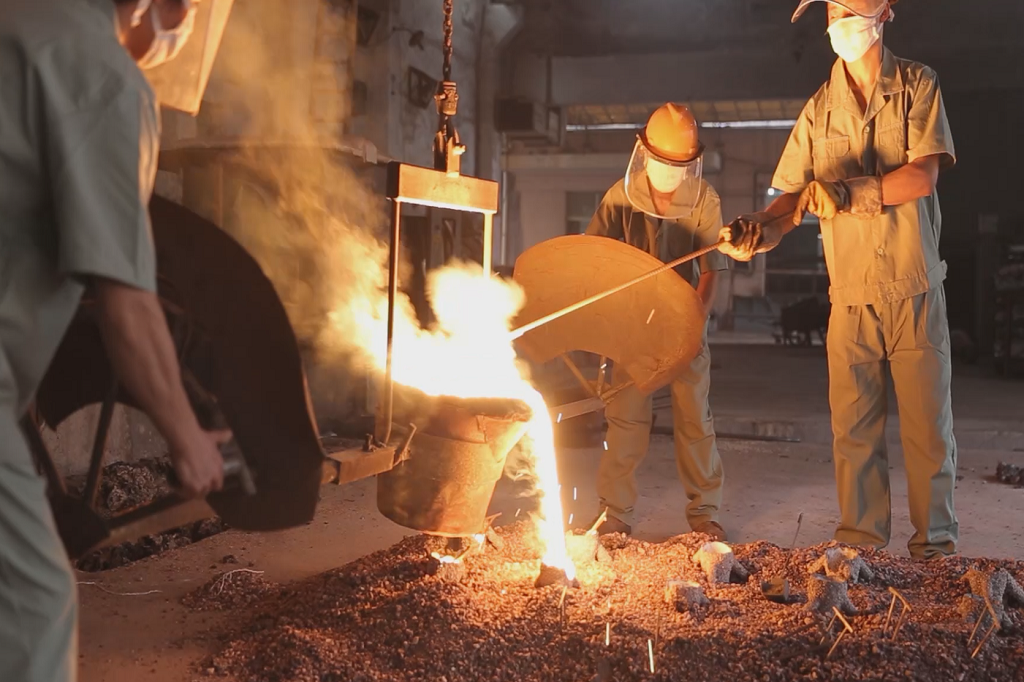
When it comes to mining castings that need to last through years of harsh conditions, ISO 18571 sets out what most people would call the baseline standards for quality control. Basically, this standard forces manufacturers to keep tight checks on everything from checking raw materials all the way through tracking chemical compositions, making sure dimensions are spot on, and validating after heat treatments. These controls help cut down on unpredictable failures that can wreck liners or buckets way too soon. Top notch foundries actually bring in non-destructive testing methods like ultrasound scans and X-ray inspections at several points during production so they catch hidden problems before things go south. Take dragline bucket teeth for instance – real time testing during solidification spots those tiny shrinkage issues right away, giving workers a chance to fix them immediately. Digital records track every single detail about each casting, from which alloy batch was used to exactly how it was heat treated and what inspections were done. All these paper trails create something like a quality dossier that operators can refer back to when planning maintenance schedules. According to some long term wear studies, components built under these rigorous standards tend to last anywhere between 35% and 60% longer than their counterparts made without such strict oversight.
Proven Longevity: Correlating Field Performance with Material and Design Decisions
What really matters for mining equipment castings is how they perform in real-world conditions when pushed to their limits. The lifespan of these components depends mostly on two big factors: choosing the right wear-resistant materials such as ADI or high chrome white iron, and designing parts that handle stress better through geometry optimization tested with FEA software. Most early failures trace back to cutting corners on either material choice or design quality. With each major breakdown costing around $740,000 on average, top mining companies are insisting on faster wear tests and digital twin simulations before buying new equipment. These technologies help convert past failure data into maintenance schedules that actually work, often doubling or even quadrupling component life spans. Instead of just promising longer service times, this method delivers measurable results based on solid metallurgy principles and real engineering verification.
FAQ
What are the advantages of using Austempered Ductile Iron (ADI) in mining equipment castings?
ADI offers a remarkable ability to withstand fractures and handle repeated stress without failing. Its ausferritic structure can absorb impact forces, making it ideal for components like shovel buckets and crusher housings in mining operations.
How does high-chrome white iron benefit mining operations?
High-chrome white iron creates strong chromium carbides that are resistant to severe gouging during ore processing. This makes it effective for components such as wear plates in mining equipment, reducing replacement costs significantly.
Why is heat treatment important in the manufacturing of mining components?
Heat treatment ensures the desired material properties are achieved, allowing components to perform optimally in the field. Consistent heat treatment leads to improved hardness and flexibility, preventing premature failures.
How is Finite Element Analysis (FEA) used in the design of mining equipment castings?
FEA helps identify stress concentrations in castings, allowing for design adjustments that distribute forces more evenly. This results in components that last longer in heavy-impact applications.
Why are ISO 18571 standards important for mining equipment castings?
ISO 18571 sets quality control standards ensuring components are manufactured with precision. Compliance with these standards reduces premature failures, increasing component longevity.
Table of Contents
- Material Integrity: High-Performance Alloys for Demanding Mining Environments
- Design Optimization: Engineering Geometry for Stress Resilience and Casting Reliability
- Manufacturing Excellence: Foundry Standards That Guarantee Longevity of Mining Equipment Castings
- Proven Longevity: Correlating Field Performance with Material and Design Decisions
-
FAQ
- What are the advantages of using Austempered Ductile Iron (ADI) in mining equipment castings?
- How does high-chrome white iron benefit mining operations?
- Why is heat treatment important in the manufacturing of mining components?
- How is Finite Element Analysis (FEA) used in the design of mining equipment castings?
- Why are ISO 18571 standards important for mining equipment castings?